Generic vs. Brand Name Medications: What Prescription Discount Cards Really Cover
If you’ve ever stood at a pharmacy counter weighing a brand-name medication against its generic version, you’re in good company. It’s one of the most common decisions patients face, and for a lot of people, the choice comes down to a mix of cost, confusion, and concern about whether the cheaper option actually works as well.
The short answer is that generics almost always do. But understanding why and knowing how prescription discount cards fit into the picture helps you make that decision with confidence rather than just hoping for the best.
What Makes a Medication “Brand Name”?
Brand-name medications are the originals. A pharmaceutical company spends years and significant money developing a new compound, running clinical trials, navigating regulatory approval, and eventually bringing the medications to market. To protect that investment, the company receives a patent, typically for around 20 years, during which no one else can manufacture the same formula.
That exclusivity has a price. Because the company is the only seller, it sets the price, and that price reflects the full cost of development, trials, marketing, and ongoing production. Medications like Lipitor, Prozac, and Advil started this way. They’re effective, well-studied, and also considerably more expensive than what comes after.
What Is a Generic Medication?
Once a brand-name medication’s patent expires, other manufacturers can produce their own versions. These are generics, and they contain the same active ingredient, in the same dose, for the same use as the original.
Generic manufacturers don’t need to repeat the original clinical trials. The safety and efficacy data already exist. They just need to demonstrate that their version behaves the same way in the body, which regulators require through a standard called bioequivalence. If it passes, the medication is approved.
Because the development costs are a fraction of what the original manufacturer spent, generics can be priced dramatically lower, often 80 to 85 percent less than the brand-name equivalent. That’s the core benefit of generic medication, and it’s a meaningful one.
Generic vs. Brand Name: What’s Actually Different?
The question most patients really want answered is whether generics work as well. The active ingredient is identical. The therapeutic effect is the same. What differs is mostly cosmetic.
The appearance changes because generic manufacturers can’t replicate the trademarked look of the original pill. Color, shape, and packaging will likely be different. Some inactive ingredients, things like fillers, dyes, or binding agents, may also vary between manufacturers, though these rarely affect how the medication works.
For a small number of people with sensitivities to specific inactive ingredients, this can matter, but for the vast majority, it doesn’t. Cost is the most significant real-world difference. Everything else is largely packaging.
What Are Prescription Discount Cards?
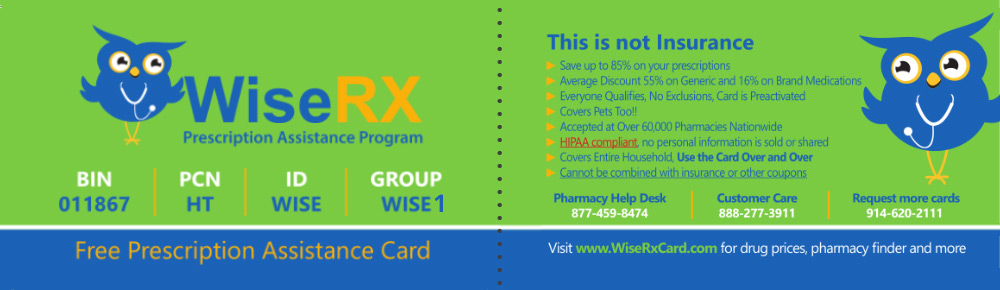
Prescription discount cards are programs that negotiate lower medication prices with pharmacies and medication manufacturers, then pass those savings on to patients. They’re free to use and don’t require insurance enrollment or any kind of approval process.
You look up your medication, find the best price at nearby pharmacies, download the card, and present it when filling the prescription. That’s it. A good Rx prescription discount card can reduce costs by up to 80 percent on certain medications, and the discounts are available to anyone, insured or not.
WiseRX® is a HIPAA-compliant platform that never sells or shares your personal information, ensuring your privacy is protected when you access these savings.
What Do Prescription Discount Cards Actually Cover?
There’s a common assumption that these cards only apply to a narrow list of medications. In practice, they cover a wide range, including both generics and brand-name medications, though the savings aren’t equal across both.
Generics are where the biggest discounts tend to show up. Medications for high blood pressure, cholesterol, diabetes, thyroid conditions, and common infections all have widely available generic versions, and the negotiated price through a discount card can sometimes come in lower than an insurance copay. For patients managing chronic conditions and filling the same prescriptions month after month, that adds up quickly.
Brand-name medications can also receive discounts through prescription discount programs, though the savings are generally smaller. The amount depends on pharmacy agreements and manufacturer pricing, which is why comparing prices across pharmacies before filling a prescription is worth a few minutes of your time.
The Real-World Case for Generics
For most patients, switching to a generic is a straightforward decision once the concern about effectiveness is off the table. The cost difference is substantial. The therapeutic outcome is the same.
And generics are widely included in prescription discount programs, making them easier to access at reduced prices.
The most commonly prescribed medications in the country have generic alternatives. Atorvastatin covers what Lipitor does for cholesterol. Metformin handles type 2 diabetes management.
Lisinopril controls blood pressure. Levothyroxine replaces thyroid hormone. Omeprazole treats acid reflux and GERD. These medications are taken by millions of people daily. In generic form, combined with an Rx prescription discount card, they’re available at prices that make consistent treatment actually sustainable for most budgets.
When Brand Name Makes Sense?
There are situations where a generic isn’t the right call.
If no generic version exists yet because the patent is still active, the brand name is the only option. If a patient reacts to a specific inactive ingredient in a generic formulation, the brand name may be better tolerated. Some medications use delivery mechanisms that aren’t replicated in generics. For a handful of medications with narrow therapeutic windows, consistency between doses matters enough that a doctor may prefer the brand name.
In any of these situations, a prescription discount card can still reduce what you pay out of pocket for the brand-name medication. It’s not an either-or.
How to Use a Prescription Discount Card?
The process is simpler than most people expect.
• Search for your medication on a discount card website or app.
• Compare prices at nearby pharmacies since the same medication can vary significantly between locations.
• Download the free prescription discount card directly to your phone.
• Show it at the pharmacy counter when picking up your prescription.
That’s the whole process: no enrollment forms, no insurance verification, no waiting period.
Do Generics Actually Work as Well?
Millions of people use generic medications every day to manage serious conditions, including diabetes, heart disease, high blood pressure, and mental health disorders. The regulatory requirement for bioequivalence means the medications delivers the same active ingredient to the bloodstream in the same amount and within a comparable timeframe as the brand-name version.
The concern that generics are somehow weaker or less reliable is widespread but not supported by the evidence. For the vast majority of patients and conditions, the difference between a generic and its brand-name counterpart exists mainly on the price tag.
How Prescription Discount Cards Help?
Healthcare costs in the US have become genuinely difficult for many families to manage, and prescription expenses are a significant part of that problem. Prescription discount cards don’t fix the underlying pricing issues, but they provide a practical, immediate way to reduce what individuals pay at the pharmacy.
They work for uninsured patients who would otherwise pay full retail price. They work for insured patients whose copays on certain medications exceed what a discount card would charge. They make it easier to compare prices across pharmacies before committing. And they cover thousands of medications, both generic and brand-name, across most major pharmacy chains.
Because they’re free and require no ongoing commitment, there’s no real downside to having one.
Final Thoughts
The generic versus brand name question has a clearer answer than most patients realize. Generics contain the same active ingredient, meet the same safety and efficacy standards, and cost dramatically less. For the overwhelming majority of patients and conditions, they work just as well.
Prescription discount cards amplify those savings further, and they work even when you’re paying for a brand-name medication that has no generic alternative yet.
If you’re filling a prescription today and haven’t compared prices, it’s worth taking five minutes to do so. Download a free prescription discount card, check what’s available at nearby pharmacies, and see whether the generic version of your medication is an option. The savings, especially for ongoing prescriptions, are often more significant than people expect.
Frequently Asked Questions
1. What is the main difference between generic and brand-name medications?
The active ingredient is the same. The difference is mostly cost, appearance, and who manufactures it. Generics are typically 80 to 85 percent cheaper than brand-name equivalents while producing the same therapeutic effect.
2. Do prescription discount cards work for both generic and brand-name medications?
Yes, though the savings are generally larger for generics. Brand-name medications can still receive meaningful discounts depending on the pharmacy and the specific medication.
3. Are generic medications safe?
Yes. They go through a rigorous regulatory approval process and must demonstrate bioequivalence to the original medication before they can be sold.
4. Can I use an Rx prescription discount card without insurance?
Absolutely. These cards are designed for anyone, insured or not. They’re particularly useful for uninsured patients or those with high-deductible plans who pay out of pocket for prescriptions.
5. How do I get a free prescription discount card?
Most programs let you download a free prescription discount card directly from their website or app. Once you have it, you can use it at participating pharmacies immediately, no sign-up or approval needed.
Disclaimer:
WiseRX® operates in full compliance with HIPAA regulations, with an unwavering commitment to user privacy, and your personal information is never sold or shared.